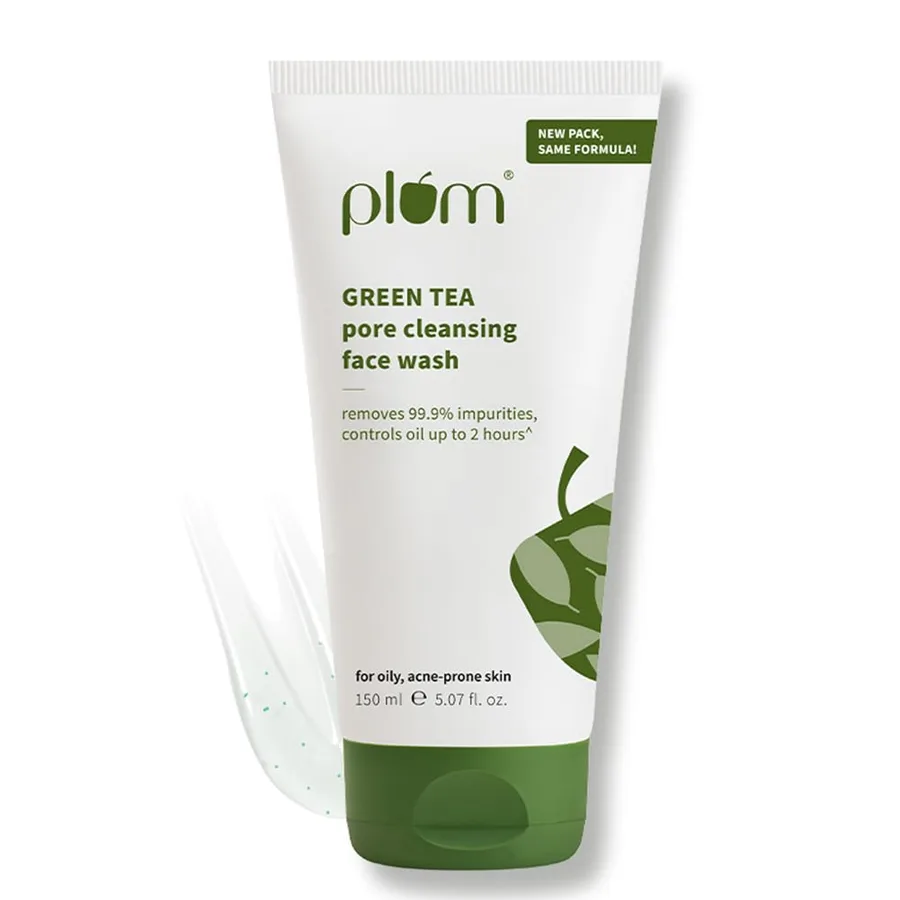
Green tea extract
- INCI name
- Camellia Sinensis Leaf Extract
- Also known as
- Camellia sinensis leaf extract; source of EGCG (epigallocatechin gallate)
Generally safe. No common concerns at the strengths used in skincare and hair care.
What it does
An extract of tea leaves rich in catechins, chiefly EGCG, which act as antioxidants and calm inflammation. Brands use it for soothing, oil-control and anti-acne claims.
- Clogs pores?
- 0/5 · Non-comedogenic
- Typical strength
- 0.1–1% in most products; 2–3% in the leave-on formulas that were studied
- Suits
- All skin types
Benefits
A 2021 meta-analysis of five small trials found that green tea applied to the skin reduced inflammatory acne lesions, while green tea taken by mouth did little. A 3% green tea cream also reduced sebum over eight weeks in a small study. Both used leave-on products; in a rinse-off wash, contact time is short and the amount is rarely disclosed, so any effect is likely small.
Concerns and risks
None well established for topical use. Extracts vary in strength and can tint or oxidise in a formula.